You Cropped the Same Photo Four Times and the Logo Still Got Cut
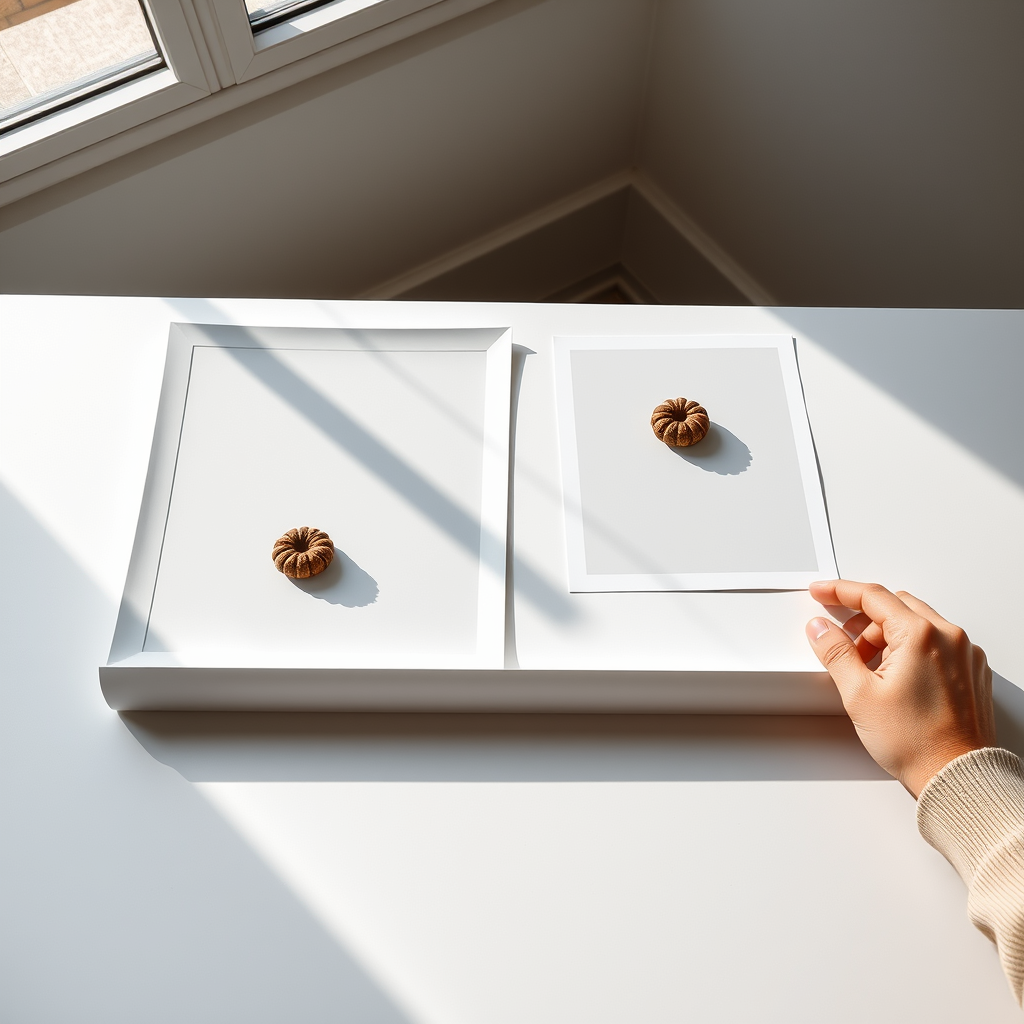
You had one good photo for the spring promo. It looked right in the email — wide, product on the left, a bit of room to breathe. Then you dropped it into the Instagram feed post and the square crop cut the right third off. The story version pushed the subject so far down that the swipe-up bar sat on it. The LinkedIn preview rendered it short and wide and now the logo in the corner is half gone. Forty minutes later you have four files named promo_final, promo_final_square, promo_sq2, and promo_story_v3, and only two of them actually look like something your business made.
This is one of those problems that never makes it onto a list of marketing priorities, because it feels like a personal failure of patience rather than a structural one. It isn't. The issue is that you're making a composition decision after the image already exists, which means every channel past the first one gets whatever's left over.
A Crop Is Not a Format, It's a Loss
When you shoot or generate a 16:9 hero, you're deciding where the subject sits, how much negative space surrounds it, and what the eye does first. Those decisions are baked into that rectangle. Cutting it to 1:1 doesn't translate them — it discards the parts of the frame that made them work. The product moves off-center. The headroom disappears. The detail you wanted people to notice sits under a caption overlay.
So you compensate. You zoom out so nothing important is near an edge, which makes every image feel distant and generic. Or you pad with blank space, which reads as a resized file, because that's what it is. Either way the channel that got the original looks good and the other three look like afterthoughts — which is roughly the opposite of how your audience actually distributes across them.
The second cost is slower to show up. Because reformatting is tedious, you stop doing it. The square gets posted everywhere. The story goes unposted. A campaign that was supposed to run across email, SMS, social and voice ends up with real creative in one place and a shrug in the others.
Generate the Ratios, Don't Harvest Them
The fix is to treat each aspect ratio as its own image rather than a derivative. Same subject, same lighting, same product, composed correctly for the shape it's going to live in. That's what Growth7's content studio does: you describe the asset once and it produces imagery in every channel aspect ratio, each one framed for that surface instead of trimmed down to fit it.
It also takes your own photos as reference. That matters more than it sounds, because the usual failure of generated imagery is that it's competent and anonymous — a clean storefront that isn't your storefront. Feeding it your actual photos keeps the shelves, the signage, the vehicles and the room you work in recognizable across all of it.
And because campaigns in Growth7 run across email, SMS, AI voice and social on one audience, the assets land where they belong without a manual export step. You approve the set, not four separate uploads. If you're reviewing from your phone between appointments, the iPhone app is where that approval happens.
Why This Compounds for Operators
If you run marketing for one business, bad crops cost you an afternoon. If you run several, they cost you a standard. Each brand needs its own look, its own reference photos, its own consistency across channels — and the moment asset production is manual, the brand you touched most recently looks sharp and the others drift.
Growth7 keeps tenants separated, so each brand's audience and assets stay its own rather than sharing a folder and a naming convention. Combined with generated ratios, the practical effect is that producing a full channel set for a fourth client costs about what producing it for the first one did.
None of this makes creative decisions for you. You still have to know what's worth photographing and what's worth saying. It just stops you from spending the good part of a Friday destroying a perfectly good image four times in a row.