Your AI Images Look Great and Nothing Like Your Business
You needed a hero image for the spring promotion, so you described your business to an image generator: a family-run garden centre, wide aisles, plants everywhere. What came back was beautiful. Sunlit glasshouse, immaculate terracotta, staff in linen aprons. It was also nothing like your place, which has a concrete floor, a trestle table by the door and a hand-painted sign your father made. You posted it anyway because the promotion went out Friday.
That gap is the quiet problem with generated imagery. The output is competent and the output is anonymous. It describes a category, not a company. And the people most likely to notice are the ones who have actually stood in your building.
Generic Images Train People to Scroll Past
A customer who has visited you once carries a mental picture of the place. When your social post shows a space they don't recognise, nothing dramatic happens — they just don't connect the post to the memory. The image stops doing the one job it was there for, which is to say this is us, you've been here, come back.
It's worse for local businesses than for anyone else, because proximity is the whole pitch. A national brand can get away with abstract studio photography. A workshop, clinic, restaurant or supplier two streets over cannot, because the reason someone chooses you is that you are a real, specific place with real, specific people in it. Imagery that could belong to any of four hundred similar businesses throws that advantage away before the copy gets a chance.
The usual alternative is worse. You dig through the camera roll, find the one decent photo from the refit two years ago, and use it for the fifth time this quarter. Or you book a photographer, get eighty good shots, and burn through them in four months. Neither of those scales to the posting rhythm that social and email actually demand.
Reference Photos Change What the Generator Is Working From
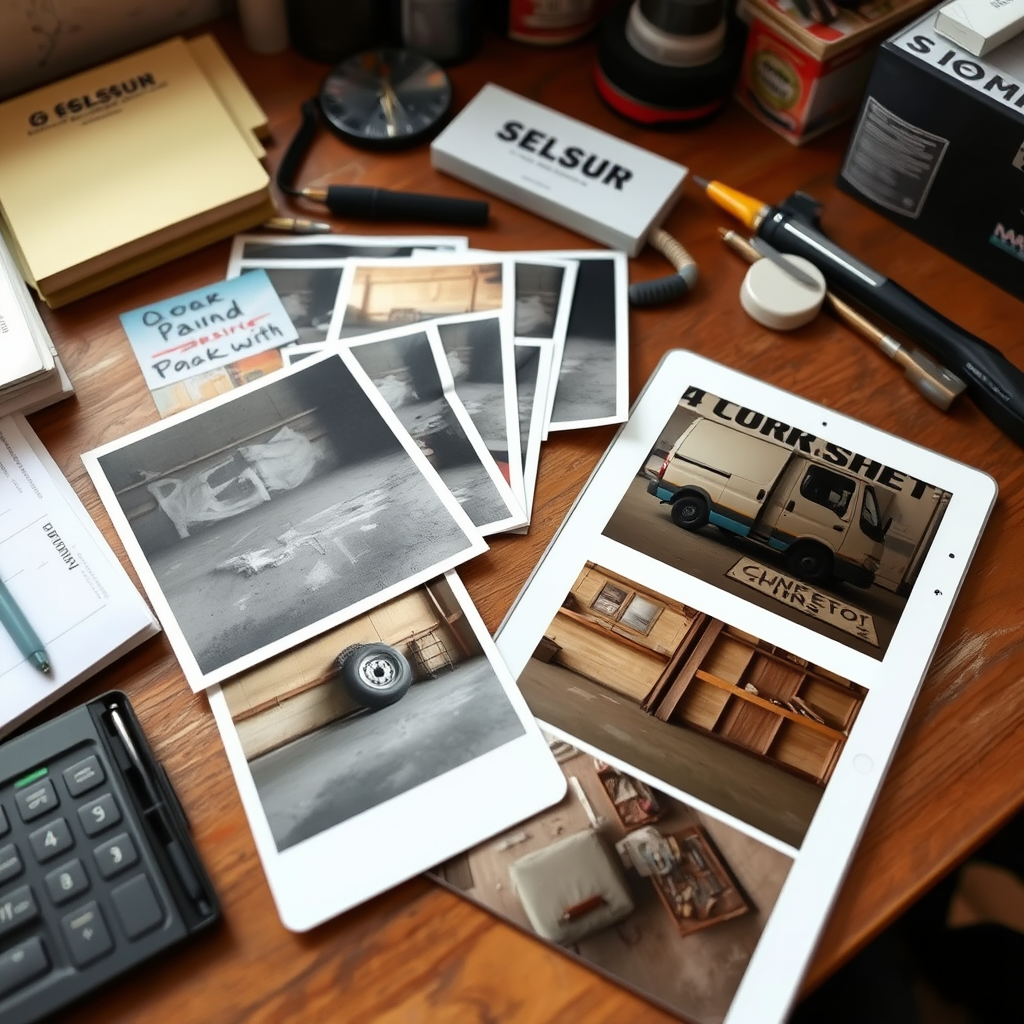
The fix is not better prompt-writing. It's giving the generator something real to anchor to. Growth7's content studio takes your own photos as reference material, so what it produces inherits the things that make your business identifiable — the light in your space, the colour of your van, the look of your actual products rather than an idealised version of them.
That shifts the work from describing your business in words, which is lossy, to showing it. You stop writing paragraphs about the aesthetic you're going for and start pointing at a photo of the thing. The output still gets you variation, volume and the specific aspect ratio each channel wants, but it varies around your business instead of around a stock-image average.
It also makes repetition survivable. One good reference photo of your storefront can seed a run of seasonal posts that all look related and none of which are the same picture again. The consistency that usually requires a brand guideline and a designer comes from the source material instead.
Build the Reference Library on a Quiet Afternoon
This works best when you're not scrambling. Spend an hour with a phone camera and capture the things you'll want to reference repeatedly:
- The space itself, from two or three angles, in ordinary daylight
- Your products or work in progress, close up and plainly lit
- Signage, vehicles, packaging, uniforms — anything that carries your colours
Nothing here needs to be a good photograph. It needs to be an accurate one. A slightly dim shot of the real counter is more useful as reference than a polished image of a counter that isn't yours.
Then the Friday deadline stops being a choice between a generic image and no image. You describe what the post needs, point at the reference, and get something that belongs to your business in the shape each channel wants. The promotion goes out on time and looks like it came from you, because the raw material did.