The Photo Looked Great Until a Customer Asked Which Branch That Was
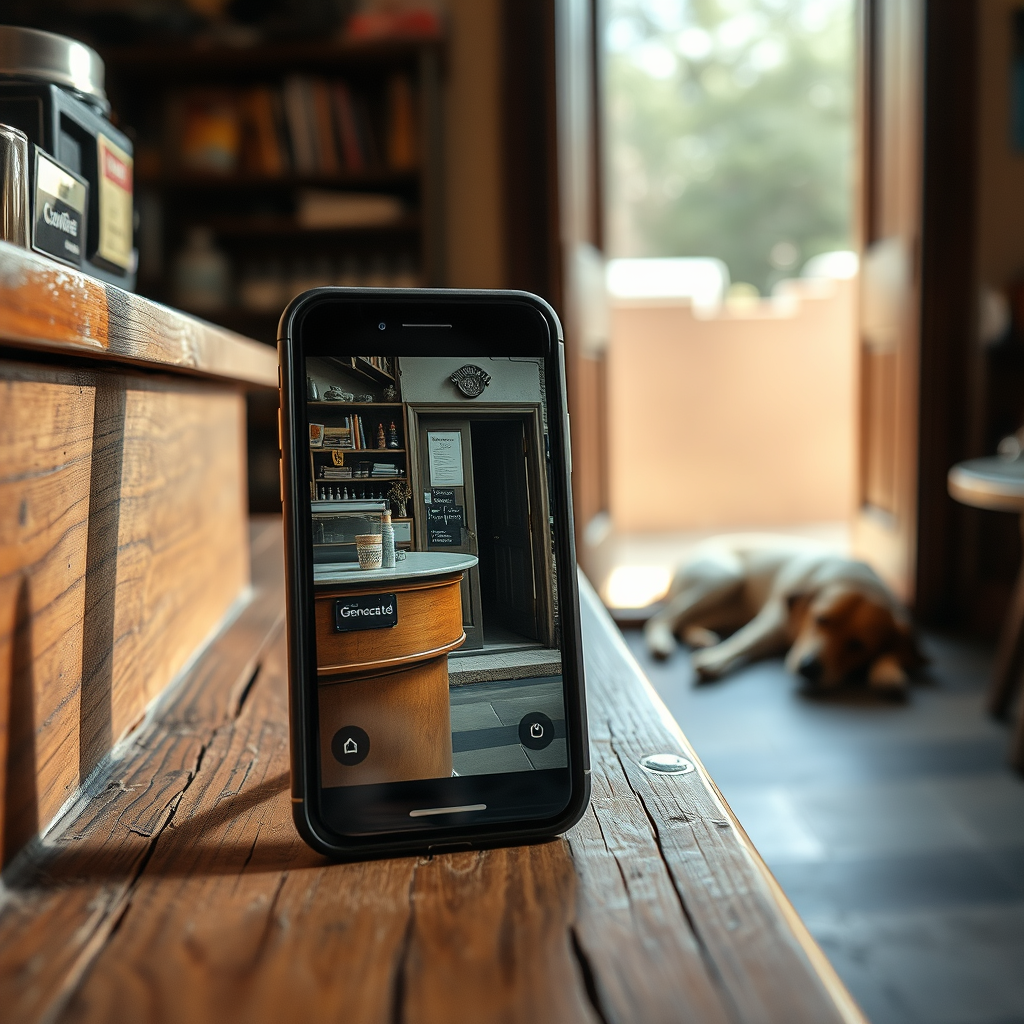
You generated an image for the spring promotion. Bright, clean, a smiling team in a sunlit open-plan space with plants. It looked professional. Then a regular customer replied asking which branch that was, because it wasn't the one she visits — the one with the low ceiling, the counter your dad built, and the dog asleep by the door.
She wasn't being difficult. She was telling you something useful: the picture was convincing enough to be read as a claim about your business, and the claim was false. That is the quiet cost of generic imagery. It doesn't look bad. It looks like somebody else.
Generic Images Make a Promise You Can't Keep
Most small businesses don't lose customers because their photos are low quality. They lose ground because their photos are interchangeable. The same bright office, the same anonymous hands over a laptop, the same stock warmth that could belong to an accountancy firm, a dental practice or a landscaping company.
For a local business, that interchangeability is a strategic problem rather than an aesthetic one. Your advantage over a national competitor is almost always specificity — the actual premises, the actual van, the actual person who answers the phone. When your marketing shows none of that, you have voluntarily given up the one thing the bigger player can't copy.
It also creates small, corrosive mismatches. The uniform in the image isn't the uniform your team wears. The product on the shelf isn't the product you stock. The season is wrong. Each one is minor. Together they teach a customer that your marketing is decoration, not information — and that's a hard lesson to unteach later when you actually need them to believe a message.
Your Camera Roll Is Already the Brief
The usual choice is a bad one: pay for a photo shoot you can't repeat every month, or use generated or stock imagery that could be anyone. Most businesses pick the second and quietly accept the compromise.
There's a third option, and it's the reason Growth7's content studio takes your own photos as reference. You already have images of the real thing — the shopfront, the workshop, the finished job, the team on a good day. Those photos become the ground truth the generation works from, so what comes out carries your actual setting, your actual products, your actual look, rather than a plausible invention of them.
This changes what reference photos are for. They stop being the final assets you ration out across the year and become the source material you draw on indefinitely. One afternoon with a phone camera can feed months of campaign imagery, because each new piece is anchored to something real instead of starting from nothing.
It also lowers the bar for what counts as a usable photo. A slightly awkward shot of the counter, taken in bad light, is still an accurate record of what the counter looks like. As reference, it does a job that a beautifully lit image of someone else's counter never will.
Volume Is the Point, and That's Why It Belongs in the Platform
The reason businesses fall back on generic imagery is rarely taste. It's throughput. A week of marketing across email, SMS, social and the blog needs more images than any small team wants to think about, and the path of least resistance is whatever's fastest.
So the studio sits inside the same platform as the campaigns and the audience, next to the send button rather than three tools away. Generate against your reference photos, get the versions each channel needs, attach them, and keep moving. Autopilot can draft and queue, but nothing publishes until a person approves it — which matters most here, because you're the only one who knows whether an image is actually true to your business.
The test is simple. Show a piece of your marketing to someone who has been inside your building. If they can tell it's you without reading the logo, you're using the advantage you have. If they ask which branch that was, you aren't.